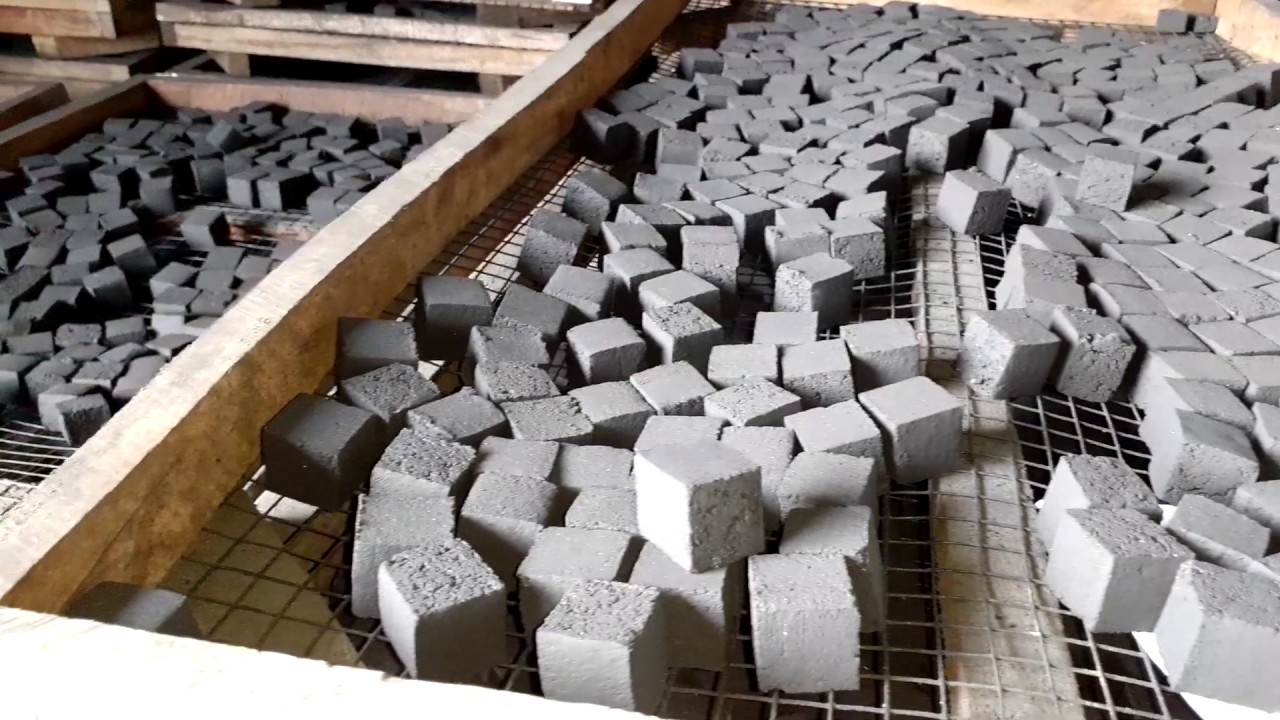
Charcoal briquette machine – Charcoal briquettes are typically made for use as a fuel source. They are commonly used for cooking and heating, especially in areas where other fuel sources may be scarce or expensive. Charcoal briquettes can be used in various settings, including outdoor grilling, indoor stoves and ovens, and even industrial applications.
The high heat and long burn time of charcoal briquettes make them popular for cooking meats and other foods, as they can provide consistent heat and an even cooking temperature. Additionally, charcoal briquettes are often used where wood may be scarce or where burning wood for fuel can contribute to deforestation and other environmental issues.
The Making Charcoal Briquette Methods
There are generally two types of charcoal briquette-making processes: the traditional charcoal-making kiln method and the modern mechanical briquetting method.
The traditional method involves stacking wood logs in a mound and covering them with leaves and soil to create a low-oxygen environment, which is then lit at the base to start the burning process. The kiln can smoke for several days until the wood turns to charcoal. This method is labor-intensive and time-consuming but produces high-quality charcoal.
On the other hand, the modern mechanical method involves using machines to compress charcoal dust and other materials into briquettes. This method is much faster and more efficient than the traditional method and can produce briquettes with consistent shapes and sizes. Additionally, the modern way allows for incorporating various binders and additives to improve the quality of the briquettes.
The Production Effectiveness Using Charcoal Briquettes Machine
Charcoal briquette machines are highly effective for converting waste materials into valuable briquettes, which can be used as fuel in various industries. The effectiveness of a briquetting device depends on several factors, including the material being processed, the moisture content of the material, the size and shape of the briquettes, and the machine’s capacity.
One of the main advantages of briquetting machines is that they can process various materials, including agricultural waste, forestry waste, municipal solid waste, and biomass residues. These materials are typically challenging to dispose of and can create environmental problems if improperly handled. By converting them into briquettes, briquette machines provide a solution for waste management while also creating a valuable fuel source.
In addition to their versatility, briquetting machines are also highly efficient. They typically operate at high pressure and compress the material into dense, uniform briquettes. This results in a high energy density fuel that burns efficiently and produces less smoke and ash than traditional fuels.
Overall, briquetting machines are an effective and sustainable solution for waste management and fuel production. They offer a range of benefits, including the ability to process a wide range of materials, high efficiency, and a clean-burning fuel source.
You may like to read the article about Coir Roll Matting Helps Maintain Sloping Ground in Watershed Areas