Coconut Shell Charcoal Wholesale Price: Market Insights and Buying Guide
In recent years, coconut-based charcoal products have gained strong popularity in global markets due to their sustainability and high performance. Importers, distributors, and industrial buyers frequently research the coconut shell charcoal wholesale price to find competitive suppliers while maintaining product quality. As environmental awareness increases, coconut shell charcoal has become a preferred alternative to traditional wood charcoal because it utilizes renewable agricultural waste rather than cutting trees.
Coconut shell charcoal is widely used across multiple industries, including barbecue fuel, activated carbon manufacturing, metallurgy, and premium hookah applications. Its longer burning time, low smoke emission, and minimal ash production make it highly attractive for both commercial and residential use.
Factors Affecting Coconut Shell Charcoal Wholesale Price
Several key factors influence the coconut shell charcoal wholesale price in international markets. The first is raw material supply. Countries like Indonesia lead global production thanks to abundant coconut plantations and well-established processing facilities. However, seasonal availability, transportation costs, and labor expenses can cause price variations throughout the year.
Production methods also affect pricing. Traditional carbonization techniques may result in lower costs but inconsistent quality, while modern kiln systems produce higher-grade charcoal with better carbon content and uniformity. Buyers seeking premium-grade products often pay more for consistent performance and certified production standards.
Quality Specifications Buyers Should Consider
Wholesale buyers typically evaluate charcoal based on fixed carbon content, ash level, moisture percentage, and calorific value. High-quality coconut shell charcoal usually contains high fixed carbon and low ash content, allowing it to burn longer and cleaner. These characteristics are especially important for premium applications such as Shisha charcoal cubes, where stable heat output and odorless burning are essential for user satisfaction.
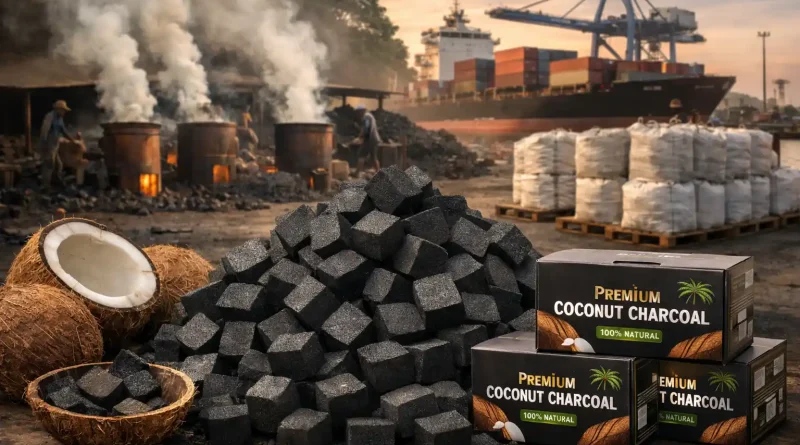
Packaging and grading also contribute to price differences. Export-grade charcoal is carefully sorted by size and packed in durable bags designed for long-distance shipping. Proper packaging reduces breakage during transport and ensures buyers receive consistent product quality.
Logistics and Export Pricing Structure
Shipping arrangements significantly impact the final coconut shell charcoal wholesale price. Suppliers commonly offer pricing under FOB or CIF terms depending on buyer preference. Freight rates, container availability, and destination ports all influence the final cost. Bulk purchases generally reduce per-ton pricing, making long-term supply agreements beneficial for distributors and large-scale buyers.
Working directly with manufacturers can also help reduce unnecessary intermediary fees. Many experienced exporters provide documentation such as certificates of origin, inspection reports, and safety data sheets to simplify international trade processes.
Choosing a Reliable Supplier
Selecting the right supplier is crucial for maintaining stable supply chains. Buyers should prioritize manufacturers with proven export experience, transparent quality control systems, and consistent production capacity. Reviewing company websites, requesting samples, and verifying certifications are recommended steps before placing large orders.
Trusted suppliers often provide detailed product information and responsive communication through official platforms like indobriquettescharcoal.com, where buyers can explore specifications, packaging options, production standards, and international shipping support efficiently.
Conclusion
Understanding the coconut shell charcoal wholesale price requires more than simply comparing numbers. Factors such as raw material sourcing, production quality, logistics, and supplier reliability all play essential roles in determining overall value. As global demand for eco-friendly fuel solutions continues to rise, coconut shell charcoal remains a strong investment opportunity for importers and distributors seeking sustainable and high-performance energy products. Businesses that focus on quality partnerships and long-term cooperation will benefit the most from this expanding international market.